
Video marketing mistakes are costing businesses thousands in wasted production time, ad spend, and lost audience trust — and most brands have no idea they are making them. In 2026, video is no longer optional. It is the dominant format across every major platform, from YouTube and Instagram to TikTok, LinkedIn, and even Google Search results. But producing video content and producing video content that actually works are two very different things.
The difference between brands that grow through video and brands that stagnate comes down to strategy, execution, and a willingness to audit what is not working. Every video marketing mistake covered in this guide has a clear, actionable fix — and implementing even five or six of these changes can transform your video marketing results within weeks.
Whether you are new to video or have been producing content for years, this guide will help you identify the video marketing mistakes that are silently undermining your results and give you a precise roadmap to fix them. Let’s get into it.
| Want Viral Videos That Actually Convert?Tasknestly’s viral video services are built to stop the scroll, hold attention, and turn viewers into paying customers — done for you.Get your FREE Video Marketing Quote → |
Ready To Actually Go Viral?
Strategy gets you started — execution gets you views. Tasknestly’s viral video service handles the full production and distribution.
Get Viral Video Services →Table of Contents
Video Marketing Mistakes: Strategy and Planning Errors
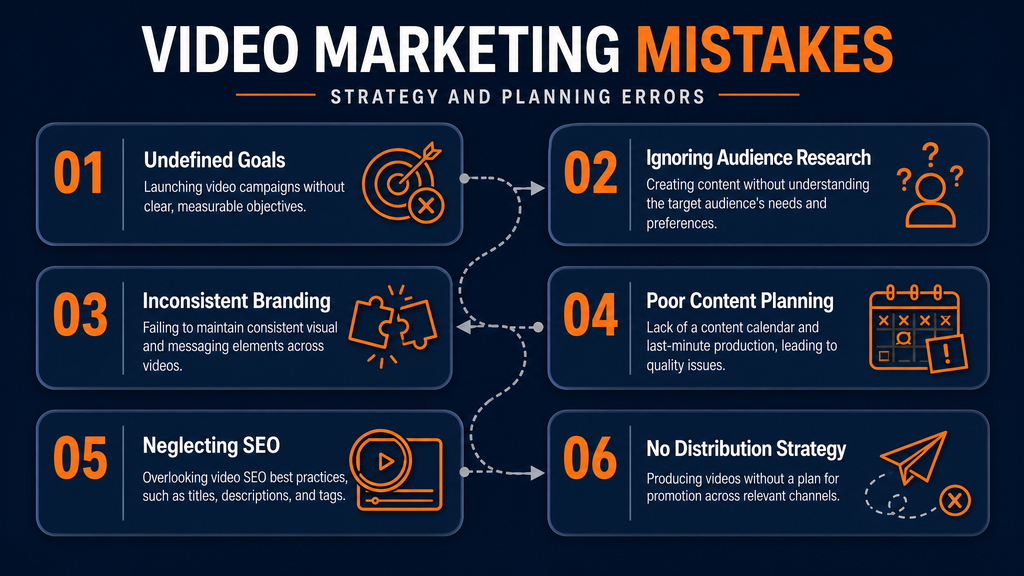
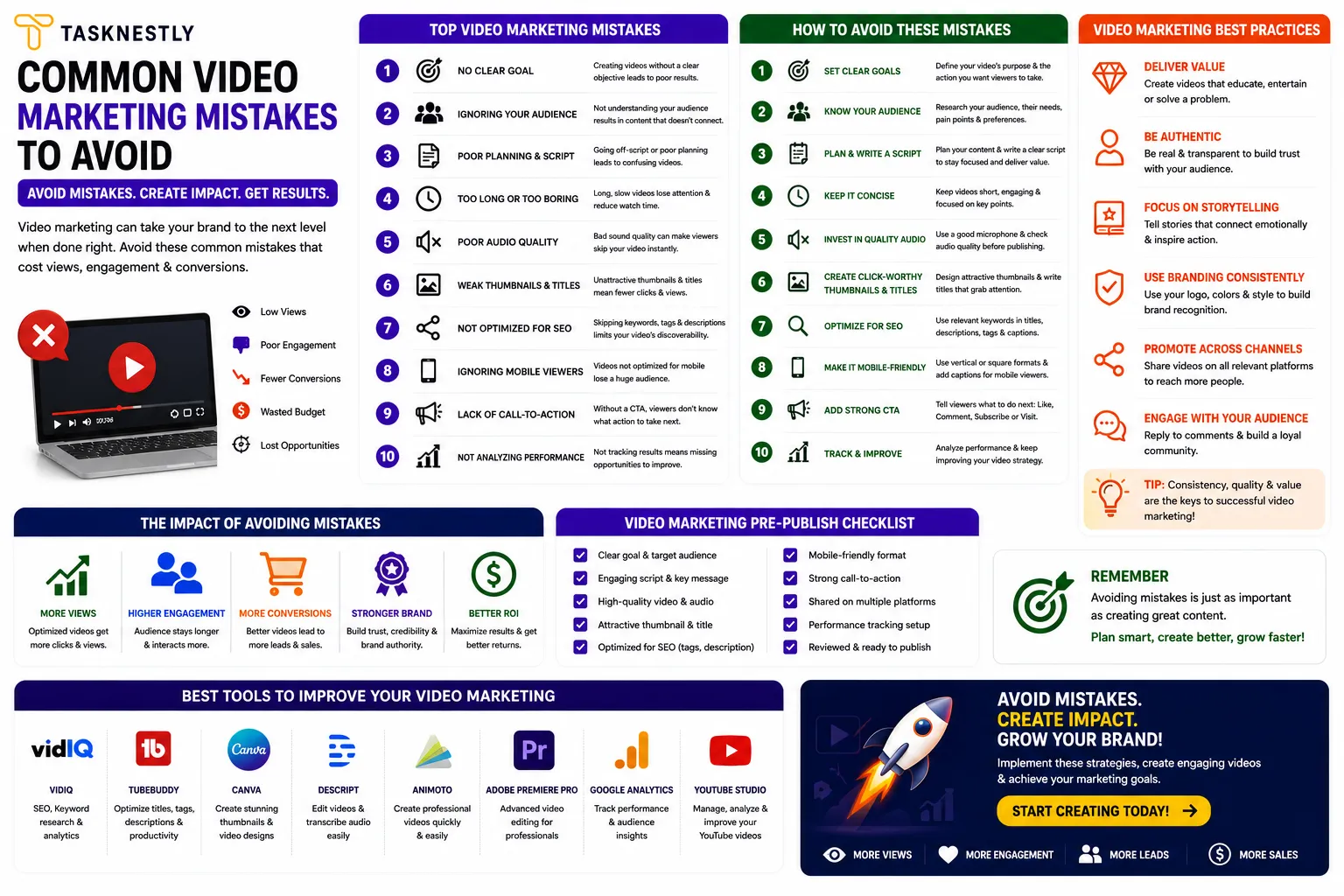
The most costly video marketing mistakes are not technical — they happen before the camera is switched on. Without a clear strategy, even beautifully produced videos fail to deliver business results.
Mistake 1: Having No Clear Goal
Every video needs one measurable objective: grow subscribers, generate leads, increase product awareness, or drive website traffic. Trying to achieve all of these in a single video achieves none of them. Before filming a single frame, define the one outcome you want this video to produce and reverse-engineer every creative decision from that goal.
Mistake 2: Talking to Everyone and Reaching No One
Generic video content that tries to appeal to all audiences connects with none. One of the most widespread video content mistakes is failing to define a specific viewer persona before scripting. Get precise: who is this person, what problem are they trying to solve, and what language do they use to describe it? The narrower your audience focus, the stronger your content resonates.
Mistake 3: No Distribution Plan
Producing a video and uploading it to one platform is not a video marketing strategy. Where will the video live? How will it be promoted? Will it be repurposed into short clips, blog posts, or email content? Brands that treat distribution as an afterthought consistently underperform brands that plan repurposing from the start. One long-form video should generate at least five to ten pieces of derivative content across your video marketing channels.
Mistake 4: Ignoring Competitor and Audience Research
Skipping audience research is one of the most avoidable video marketing mistakes. Study the comment sections of top-performing competitor videos — that is free, real-time audience research. Survey your own customers, review your analytics, and identify the questions your audience is already asking. The best video ideas come directly from your viewers, not from guesswork.
Mistake 5: Inconsistent Posting Schedule
Algorithms on every major video platform reward consistency. Channels that post sporadically confuse both the algorithm and their audience. Pick a realistic posting frequency — even once per week — and commit to it for a minimum of 90 days. Batch-produce content two to four weeks in advance so that life disruptions never cause a posting gap that harms your video marketing momentum.
Ready To Actually Go Viral?
Strategy gets you started — execution gets you views. Tasknestly’s viral video service handles the full production and distribution.
Get Viral Video Services →Production Mistakes That Kill Watch Time
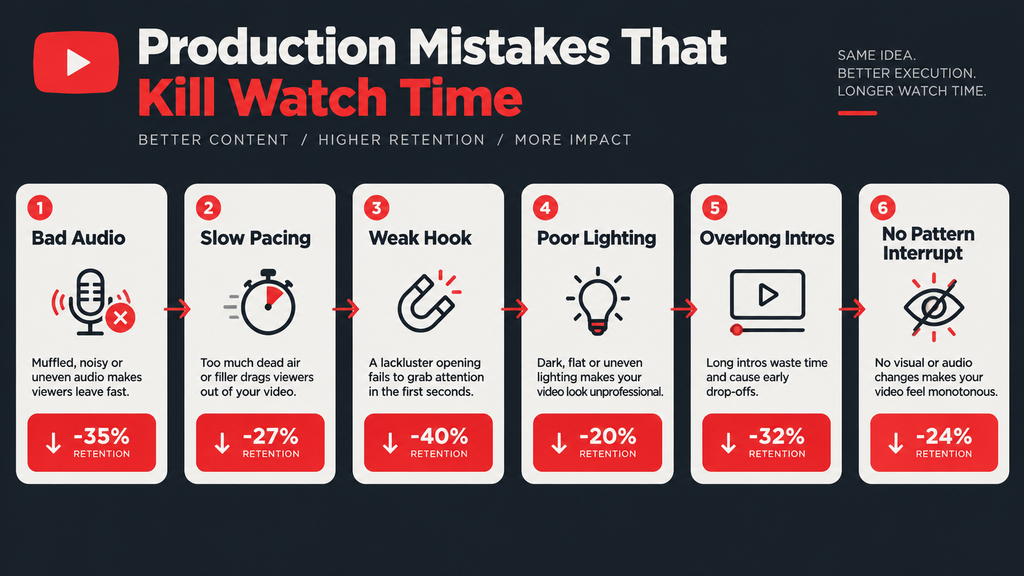
Great strategy means nothing if your production quality drives viewers away. These video content mistakes happen during filming and editing and directly damage your watch time, retention rate, and channel credibility.
Mistake 6: Ignoring the First 3 Seconds
The hook is everything. Viewers decide within three seconds whether to keep watching or scroll past. One of the most critical video marketing mistakes is opening with a slow intro, a logo animation, or a rambling greeting. Instead, lead with a bold statement, a surprising statistic, a provocative question, or a visual that immediately signals value. The first three seconds determine the success of the entire video.
Mistake 7: Poor Audio Quality
Viewers will tolerate average video quality, but they will not tolerate poor audio. Nothing signals low production value faster than tinny, echo-filled, or distorted sound. A USB condenser microphone or lapel mic costs less than a hundred dollars and instantly transforms your perceived professionalism. If you are serious about video marketing, audio quality is non-negotiable.
Mistake 8: Overly Long Introductions
Even after a strong hook, many creators spend two to three minutes re-introducing themselves and explaining what the video will cover. Viewers already know — they clicked on it. Get to the value within 15 seconds of the hook. Every second of unnecessary preamble is a second where viewers are choosing to leave.
Mistake 9: No Captions or Subtitles
Eighty-five percent of social media video is watched without sound. If your video has no captions, you are invisible to the majority of your potential viewers. Beyond accessibility, captions also improve your video SEO mistakes profile — platforms can index captioned text, improving discoverability. Adding captions is one of the lowest-effort, highest-impact fixes in this entire list.
Mistake 10: Weak or Misleading Thumbnails
Your thumbnail is your video’s advertisement. A weak thumbnail — low contrast, cluttered text, or a blurry screenshot — kills your click-through rate before anyone ever sees your video marketing content. A strong thumbnail uses bold text (three to five words maximum), a high-contrast background, and a clear focal point, usually a face with an expressive reaction. Never use a thumbnail that misrepresents the content — short-term clicks are not worth long-term audience trust damage.
Ready To Actually Go Viral?
Strategy gets you started — execution gets you views. Tasknestly’s viral video service handles the full production and distribution.
Get Viral Video Services →Video SEO Mistakes That Destroy Discoverability
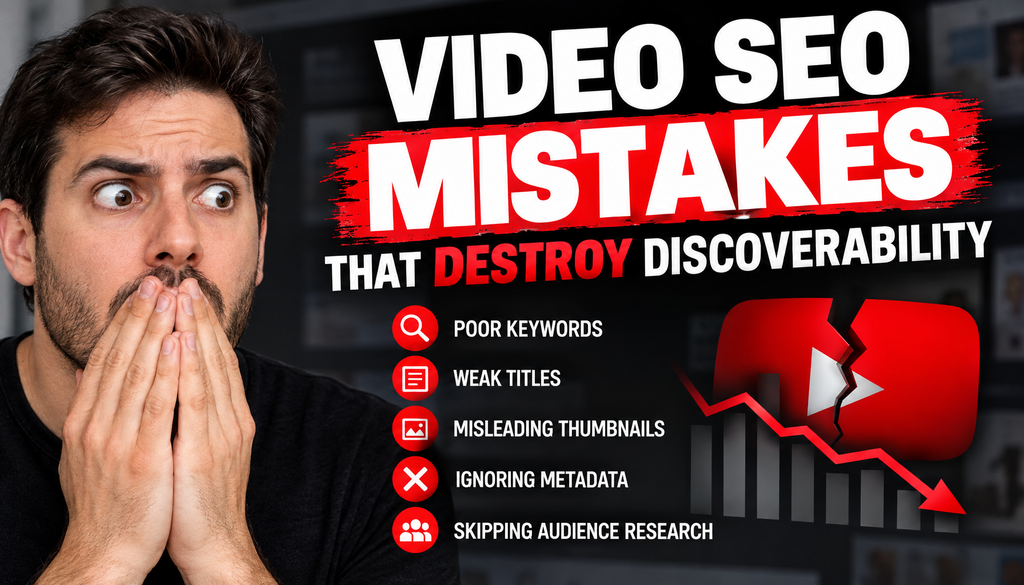
Video SEO mistakes are among the most damaging errors a brand can make because they prevent your content from being discovered at all, regardless of quality. These fixes directly impact how YouTube and Google rank and recommend your videos.
Mistake 11: Skipping Keyword Research
Uploading a video with a title and description written from instinct rather than data is one of the most expensive video marketing mistakes you can make. Use TubeBuddy or SEMrush to identify exactly what your target audience is searching for. Keyword-optimise your title, description, and tags before every upload. Platforms cannot recommend what they cannot categorise.
Mistake 12: Writing Poor Video Titles
Your video title must do two things simultaneously: include your target keyword and compel a human to click. Titles that are vague, keyword-stuffed, or overly clever fail at both. Model successful titles in your niche — they typically combine a specific benefit, a number or timeframe, and a keyword. For example, ‘7 Video Marketing Mistakes Killing Your Views in 2026’ outperforms ‘My Video Marketing Tips’ on every metric.
Mistake 13: Ignoring Video Descriptions
The video description is a goldmine of SEO real estate that most creators waste. The first two to three sentences are shown in search results — make them keyword-rich and compelling. Below that, include a full description of the video content, timestamps, links to related content, and a call to action. A well-written description can double your video’s discoverability without changing a single second of footage.
Mistake 14: No End Screens or Cards
End screens and cards keep viewers inside your content ecosystem. Failing to use them is one of the most overlooked video content mistakes on YouTube. After a viewer finishes one video, give them an immediate next step — another video, a playlist, or a subscription prompt. Platforms reward channels that generate long session times, and strategic end screens are the simplest way to achieve this.
Ready To Actually Go Viral?
Strategy gets you started — execution gets you views. Tasknestly’s viral video service handles the full production and distribution.
Get Viral Video Services →Engagement and Conversion Mistakes That Waste Your Audience
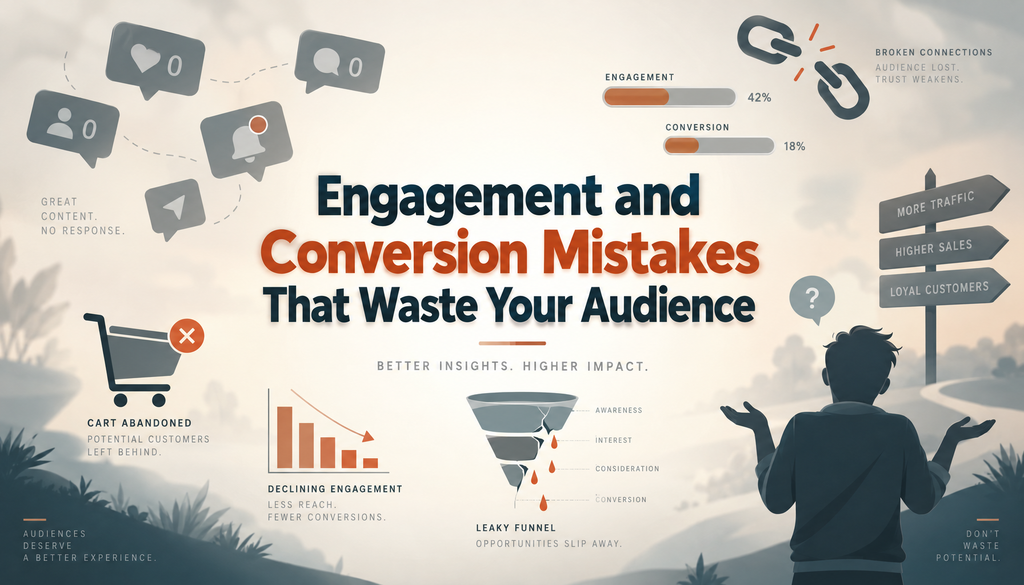
Getting views is only half the battle. These video marketing mistakes prevent your audience from taking action, becoming subscribers, or converting into customers.
Mistake 15: No Call to Action
This is the most consistently made video marketing mistake across every niche and platform. Every video must end with one clear, specific call to action. Not three. Not a vague ‘like and subscribe.’ One specific instruction: visit this page, download this resource, book a consultation, or leave a comment answering this question. Ambiguity kills conversions.
Mistake 16: Burying the CTA at the End
While the closing CTA is essential, only a fraction of viewers reach the final ten seconds of a video. For high-intent content, place a soft CTA in the middle of the video as well — a brief mention of a relevant resource or service that does not disrupt the flow. This ensures that even viewers who drop off early receive the conversion prompt.
Mistake 17: Not Engaging With Comments
Comment engagement is one of the most underrated components of a video marketing strategy. Responding to comments within the first hour of posting signals to platform algorithms that your video is generating active discussion — a strong ranking factor. Ignoring your comment section is not just a missed community opportunity; it is a video marketing mistake that directly limits your algorithmic reach.
Mistake 18: Inconsistent Branding Across Videos
Viewers build trust through familiarity. If your thumbnails, colour palette, tone of voice, and on-screen graphics change from video to video, you undermine the brand recognition that leads to loyal subscribers. Create a simple brand kit — consistent colours, fonts, lower thirds, and an intro/outro template — and apply it to every piece of video marketing content you produce.
| Struggling to Turn Video Views Into Real Business Results?Tasknestly’s digital marketing services combine video strategy, SEO, and conversion optimisation to make your content work harder for your business.Book your free digital marketing consultation → |
Ready To Actually Go Viral?
Strategy gets you started — execution gets you views. Tasknestly’s viral video service handles the full production and distribution.
Get Viral Video Services →Platform-Specific Video Marketing Mistakes to Stop Making
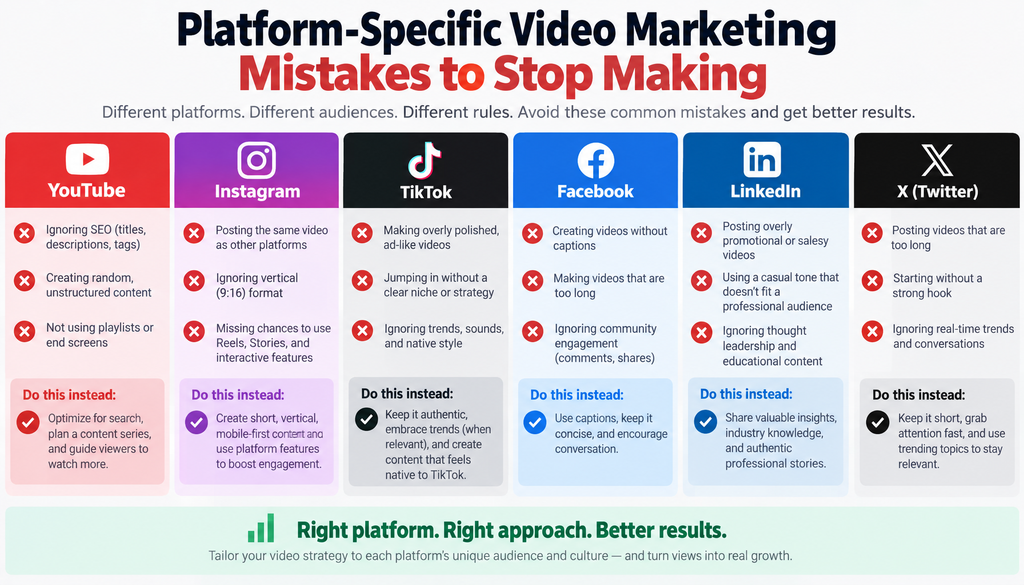
Different platforms have different algorithms, audience behaviours, and content formats. Applying a one-size-fits-all approach is one of the most preventable video content mistakes in 2026.
Mistake 19: Uploading Landscape Videos to Short-Form Platforms
Vertical video (9:16 ratio) is the native format for Instagram Reels, TikTok, and YouTube Shorts. Uploading horizontal content to these platforms results in black bars, poor display, and lower algorithmic prioritisation. Always produce short-form content in vertical format, or crop and reframe existing horizontal footage before distributing to short-form channels.
Mistake 20: Ignoring Platform-Specific Trends and Features
Each platform releases new features — stickers, polls, templates, soundtracks — and algorithmically rewards early adopters. Brands that ignore these features miss significant organic reach boosts. This is a recurring video marketing mistake for businesses that treat all platforms identically. Spend 30 minutes per week reviewing platform update blogs and test new features within 48 hours of release.
Mistake 21: Posting the Same Video Everywhere Without Adapting
Repurposing is smart. Repurposing without adapting is a mistake. A 15-minute YouTube tutorial does not become a TikTok by being trimmed to 60 seconds — it needs a new hook, faster pacing, and native text overlays. A LinkedIn video requires a professional context framing. Adapt content to the platform culture, not just the platform dimensions.
Ready To Actually Go Viral?
Strategy gets you started — execution gets you views. Tasknestly’s viral video service handles the full production and distribution.
Get Viral Video Services →Analytics Mistakes That Keep You Repeating Video Content Mistakes
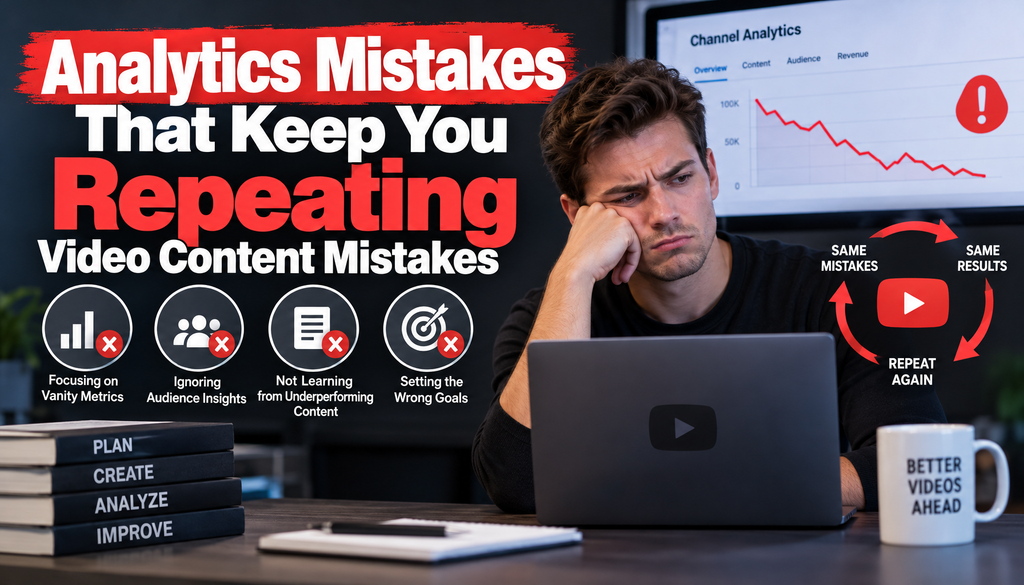
The fastest way to stop making video content mistakes is to use data. Yet most brands either ignore their analytics entirely or misread the metrics that matter most.
Mistake 22: Ignoring Audience Retention Data
Audience retention graphs tell you exactly where viewers stop watching. If there is a consistent drop-off at the 45-second mark, something specific is happening at that point — a slow transition, a rambling explanation, or a topic shift that loses interest. Review your retention graph after every upload and use it to make targeted improvements to your next video. This is the single fastest way to improve your video marketing strategy and reduce the video content mistakes that cost you watch time.
Mistake 23: Obsessing Over Views Instead of Watch Time
Views are a vanity metric. Watch time — the total minutes viewers spend watching your content — is what YouTube and most video platforms use to determine reach. A video with 500 views and 80% average view duration will outperform a video with 5,000 views and 15% retention in algorithmic recommendations. Reframe your video marketing success metrics around watch time, not view counts, and your video marketing strategy will improve immediately.
Mistake 24: Never A/B Testing Thumbnails or Titles
YouTube allows you to test multiple thumbnails on the same video. Most creators never use this feature. A/B testing your thumbnails can improve your click-through rate by 20 to 50 percent — often the single biggest lever available to increase views on existing content without producing anything new. Test one variable at a time: thumbnail background colour, text size, or facial expression.
Mistake 25: Quitting Before the Algorithm Kicks In
This is the most heartbreaking of all video marketing mistakes — giving up just before momentum builds. Most channels see minimal growth for the first three to six months. Algorithms need time to categorise your content, build audience data, and understand who to recommend your videos to. Brands that quit before the 90-day mark never discover what consistent video marketing execution could have produced. Commit to at least 50 videos before making any strategic judgements about whether video marketing is working for your business.
Ready To Actually Go Viral?
Strategy gets you started — execution gets you views. Tasknestly’s viral video service handles the full production and distribution.
Get Viral Video Services →Quick Reference: 25 Video Marketing Mistakes and Their Fixes
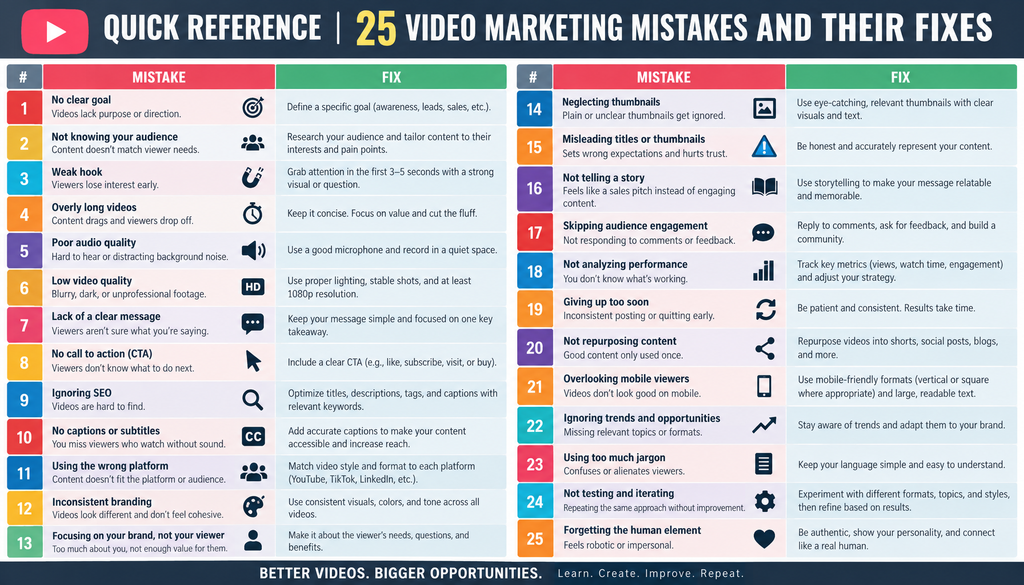
Use this table as a recurring audit checklist for your video content and video marketing strategy every quarter.
| # | Video Marketing Mistake | The Fix |
| 1 | No clear goal or strategy | Define one measurable goal per video before filming |
| 2 | Ignoring the first 3 seconds | Open with a hook — a bold statement, question, or visual |
| 3 | Poor audio quality | Invest in a lapel or USB condenser microphone |
| 4 | No captions or subtitles | Add captions — 85% of social video is watched on mute |
| 5 | Skipping keyword research | Use TubeBuddy or SEMrush to find what your audience searches |
| 6 | Inconsistent posting schedule | Batch-produce and schedule content 2–4 weeks in advance |
| 7 | No CTA at the end | Every video must end with one clear, specific call to action |
| 8 | Ignoring video SEO mistakes | Optimise title, description, tags, and thumbnail for search |
| 9 | Overly long intros | Cut to the point — get to the value within 15 seconds |
| 10 | Not repurposing content | Turn one video into clips, blog posts, carousels, and reels |
| 11 | Weak thumbnails | Use bold text, high-contrast colours, and a clear focal point |
| 12 | No audience research | Survey your audience and study competitor comment sections |
| 13 | Talking to everyone, reaching no one | Narrow your niche — speak to one specific viewer persona |
| 14 | Ignoring analytics | Review watch time, drop-off points, and CTR every week |
| 15 | No consistent branding | Create a brand kit: colours, fonts, logo, and intro/outro |
| Essential Tools to Fix Your Video Marketing Mistakes Fast TubeBuddy, Research keywords, A/B test thumbnails, and optimize every video for YouTube search in one tool. InVideo, Create professional, brand-consistent videos fast with AI-powered templates built for marketers .Opus Clip, Automatically clip your long-form videos into viral short-form content for TikTok, Reels, and Shorts. |
Ready To Actually Go Viral?
Strategy gets you started — execution gets you views. Tasknestly’s viral video service handles the full production and distribution.
Get Viral Video Services →Frequently Asked Questions: Video Marketing Mistakes

| Question | Answer |
| What are the most common video marketing mistakes? | The most damaging video marketing mistakes include ignoring the hook in the first 3 seconds, skipping keyword research, having no clear CTA, poor audio quality, and posting inconsistently. Each one directly hurts views, retention, and conversions. |
| How do video marketing mistakes affect SEO? | Video SEO mistakes like missing keyword-optimised titles, descriptions, and tags reduce discoverability on YouTube and Google. Poor watch time caused by weak hooks and slow intros signals low quality to algorithms and suppresses reach. |
| How often should I post video content? | Consistency matters more than frequency. One well-produced video per week outperforms five rushed videos. Pick a schedule you can sustain — daily, weekly, or bi-weekly — and stick to it for at least 90 days before evaluating results. |
| Can video marketing mistakes hurt my brand reputation? | Yes. Poor audio, no captions, inconsistent branding, and misleading thumbnails all damage credibility. Viewers judge brand quality within seconds, and a single poor video can cost you subscribers and customer trust. |
| What is the biggest video marketing mistake for small businesses? | The single biggest mistake small businesses make is producing videos with no clear strategy. Without defined goals, target audiences, and distribution plans, even high-quality video content fails to generate leads or sales. |
| How do I fix low video engagement? | Audit your hook (first 3 seconds), check your thumbnail click-through rate, review audience retention graphs to find drop-off points, and add a stronger CTA. Most engagement problems trace back to weak openings or unclear viewer value. |
| Should I use captions on all my marketing videos? | Yes, always. Captions improve accessibility, increase watch time on silent autoplay, boost SEO through text crawlability, and expand your reach to non-native speakers. They are one of the easiest video content improvements you can make. |
Ready To Actually Go Viral?
Strategy gets you started — execution gets you views. Tasknestly’s viral video service handles the full production and distribution.
Get Viral Video Services →Conclusion: Stop Making These Video Marketing Mistakes in 2026
Every one of the 25 video marketing mistakes in this guide is fixable — and most of them require zero additional budget. They require attention, intention, and a willingness to audit your current output honestly. The brands winning with video in 2026 are not necessarily the ones with the biggest production budgets. They are the ones who understand their audience, hook viewers in the first three seconds, optimise every upload for search, and treat every video as a conversion asset, not just content.
Start with the mistakes that feel most familiar. If your watch time is low, focus on your hook and intro pacing. If your views are stagnant, fix your video SEO mistakes — titles, descriptions, and thumbnails. If you are getting views but no leads, audit your CTAs. Every video marketing improvement you make compounds over time. Tackle one cluster of video content mistakes at a time and measure the impact before moving to the next. Incremental improvements compound into dramatic results over 90 to 180 days.
At Tasknestly, we help businesses build video marketing strategies that avoid these pitfalls from day one — from scripting and production to SEO, distribution, and conversion optimisation. If you are ready to make video a genuine growth channel for your business, explore our viral video services, or request a free quote today and let us build a strategy tailored to your goals.
Want to see exactly where viewers leave your videos? YouTube’s guide to audience retention and key moments shows you how to read the graph in YouTube Studio.
Ready To Actually Go Viral?
Strategy gets you started — execution gets you views. Tasknestly’s viral video service handles the full production and distribution.
Get Viral Video Services →Grow With Tasknestly
Subscribe to the Tasknestly newsletter and get the latest tips on websites, SEO, social media, and digital growth.